VR tech evolves fast – but they still haven’t figured out the head straps.
I’ve been Marie Kondo-ing my stuff at home this week as part of “Spring” cleaning. It’s tradition to “sweep away” lingering bad luck from the past year before Lunar New Year and welcome good fortune. (Oh yes, I am superstitious.)
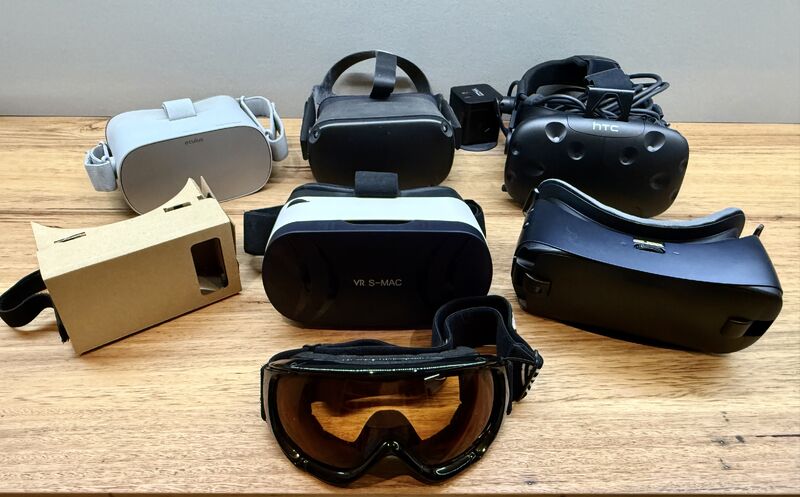
In cleaning up, I revisited my collection of obsolete VR headsets accumulated over the years through my research. Not that many years, really – VR tech moves so fast that each new product release quickly makes the last one obsolete. Here’s a photo of my collection for some tech nostalgia. You might notice an outlier in the mix. 😶
I’ve been working with the Meta Quest 3 lately, particularly interested in how its improved resolution and reduced latency might enhance student learning experiences. People often take these advancements for granted, but I’m so in awe of how far passthrough has come. That said, it’s still not remotely close to the high-res video passthrough of Apple Vision Pro.
Back in 2018, I was teaching VR studio courses at Digital Media (RMIT School of Design) – we explored the capabilities and constraints of these different devices. PC VR systems like the HTC Vive and Oculus Rift offered beautiful fidelity and realistic 3D environments (for 2018, anyway), but they came with the burden of needing high-spec computers, cumbersome setups and frequent technical challenges. Mobile VRs like Google Cardboard were far more accessible and affordable, but they required compromises in fidelity and interaction design.
Each semester, students would grapple with these trade-offs as they considered the design challenges of immersive environments. It wasn’t just about creating comfortable, motion-sickness-free experiences or optimising interaction design for specific devices. It was also about asking deeper questions: Are we compromising accessibility and comfort for higher fidelity? What are the ethical implications of deeper immersion? Who gets left behind as we push the boundaries of technology?
At RMIT University Digital Design, we encourage students to be platform, software and device agnostic. It’s not about mastering specific tools or hardware, but about understanding the underpinning principles of responsible, ethical, accessible and regenerative design. These considerations remain critical, no matter how advanced technology becomes.
Anyway, for all the progress VR has made, it’s still clunky. I thought VR tech would’ve shrunk to the size of glasses by now. Yet here I am, constantly adjusting its straps and walking away with a lovely headset imprint on my face. 💀
Pictured above – old devices (left to right):
Back row – Oculus Go, Oculus Rift, HTC Vive
Mid row – Google Cardboard, no-brand mobile VR, Samsung Gear VR
Front row – 2025 New Apple Vision Pro (Kidding. It’s my ski goggles.)