I’ve been working on a conference paper this week – the writing pushed me to articulate more clearly something that’s been building across my research practice.
The farm is not just where I go to write, think and reset – it’s becoming a methodological setting for my work in digital design. I’m calling it Farm Lab, where I’m developing a land-based digital practice to examine physical-digital convergence, environmental interaction and more-than-human interaction design.
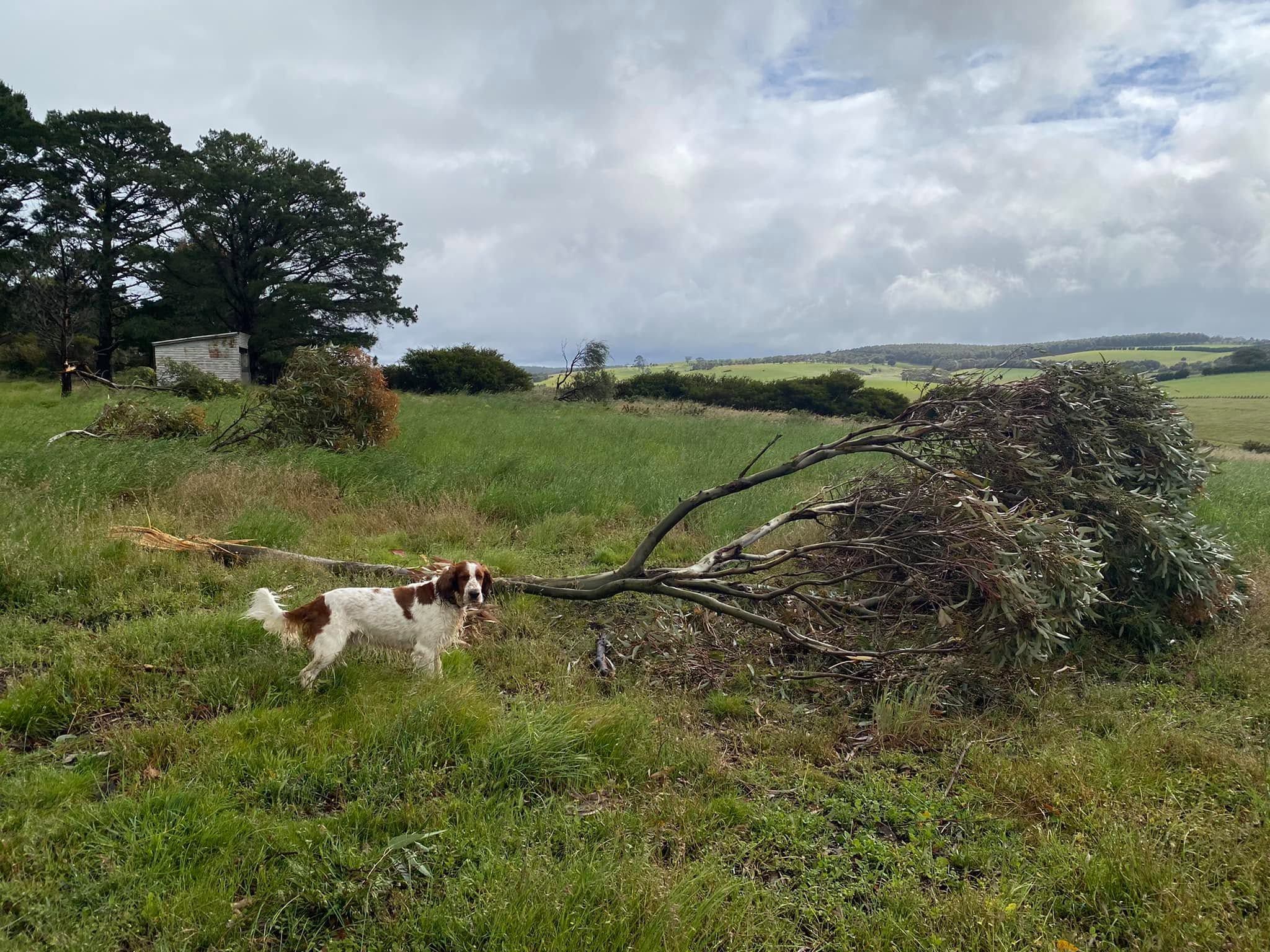
I have a complicated love-hate relationship with the weather here. When I first acquired the farm, I raged against it. I was essentially a woman yelling and shaking her fists at the sky. Every plan and assumption I brought with me kept being undone by the weather. The tent blew away. The chicken coop flooded. Trees came down. Long droughts meant no water left in the tank. Freezing in winter because I hadn’t prepared firewood. Lambs died. It was when I truly felt what it means to be subject to the elements rather than simply observing from a distance.
It occurred to me how this experience challenged something that sits deep in digital design – our assumption that the world could be stabilised to design neatly around it.
The field of digital design, interaction design and HCI often happens within controlled, protected and manageable lab/studio environments. Perfect setup, nice dataset, prototype tested in predictable conditions. Even when the subject matter is environmental, it often arrives as representation, eg data feed, image, simulation, metaphor or aesthetic condition for the digital medium.
What if we work against that distance? Where the environment is not a backdrop. The weather goes beyond data – a spectrum from stillness and calmness to absolute volatility and force, with human intervention taken out of the equation. Environmental conditions not positioned as contingency, but at the heart of the research.
It makes things uncomfortable because more-than-human interaction can sometimes become soft vocabulary. We make claims that the non-human participates, that nature has agency and systems are ecological, yet those claims risk being too conceptually tidy sometimes.
Farm Lab is my way of making those claims messy. It’s where physical-digital convergence becomes interesting – not in a seamless way – it’s messy, exposed, unpredictable. Farm Lab is a method for asking: what do digital systems become when they are not sealed off from land, weather, maintenance and failure? How might interaction design change when the non-human is not treated as metaphor or content, but as an active force with material consequence?
This is the research direction I am now building through Farm Lab – not digital design detached from the world, but digital design forced into a more honest relationship with land.