Belonging doesn’t only happen in physical classrooms – it also happens in digital learning spaces.
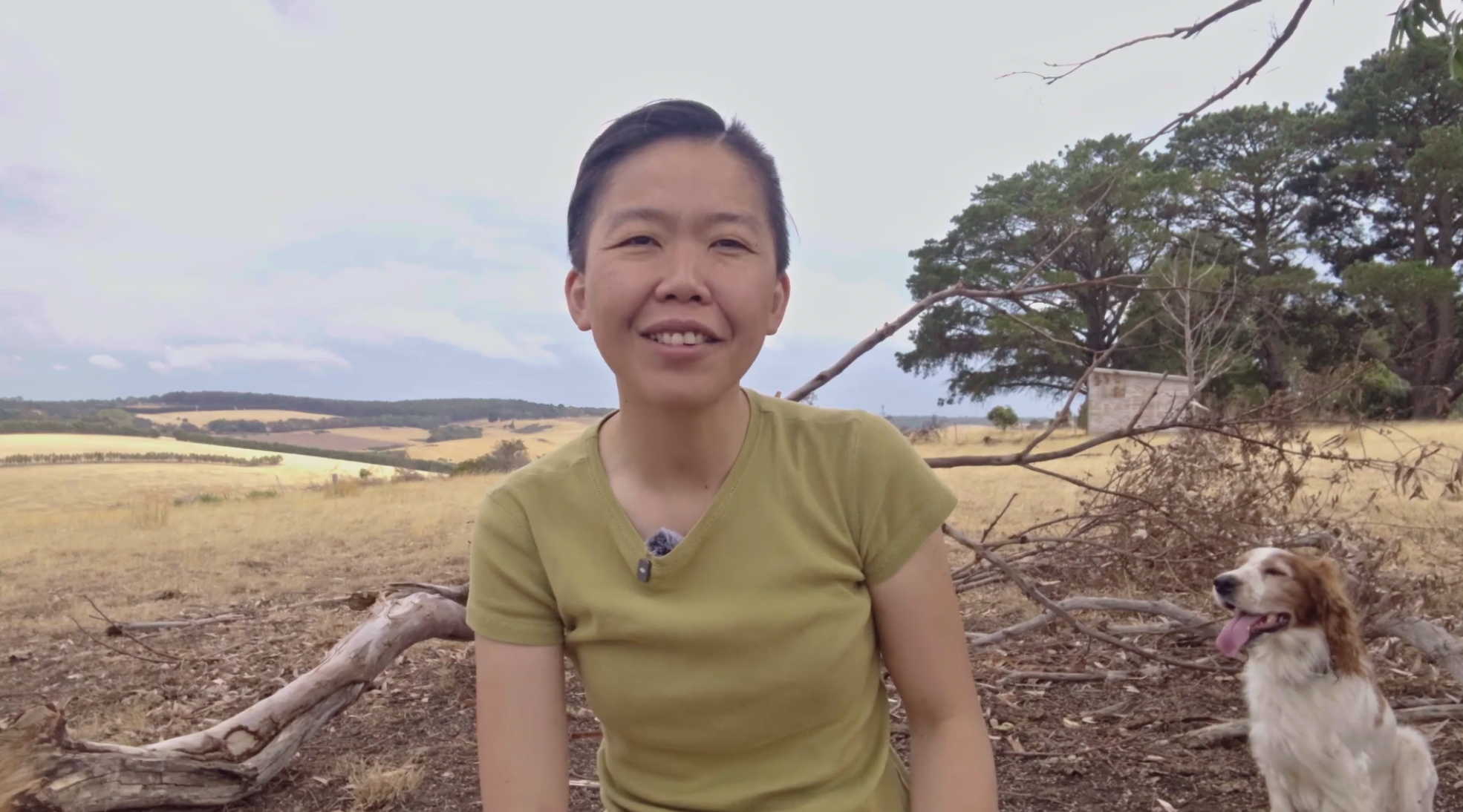
A short excerpt from my video for RMIT University’s new Graduate Certificate for Tertiary Teaching. I was invited to develop a video series – this one around inclusive learning and teaching through digital experiences.
Over more than 2 years, as Associate Dean (Digital Design), I led Learning and Teaching work for the largest discipline in School of Design across 3 degrees – Animation, Games and Digital Media, working alongside Program Managers and colleagues in our discipline. It’s one of the largest pieces of pedagogy design being undertaken at scale within School of Design.
Beyond this leadership work in L&T, I’ve also shared my knowledge and 23 years of tertiary education experience with educators across schools and colleges of RMIT University.
I filmed the series on my farm last summer. I wanted the videos to not feel overly institutional. More like a conversation between peers – one educator speaking to another, drawing from lived experience and realities of working with students.
My dog Preston decided he was a star. I tried pushing him out of frame but he refused. So I kept the camera rolling.
When we talk about learning and teaching, there’s often a tendency to speak in the abstract. We talk about assessments, rubrics, pathways, student experience and belonging. Sometimes those words become too easy to say and rather detached from the actual experience in the classroom.
Belonging is one of those words that triggers me – often thrown about rather callously in universities. You understand it differently when you lived, learned or taught and worked from the margins.
Belonging is not a trendy word or an inclusion slogan – it’s the difference between feeling able to speak or staying silent because you do not feel your voice is deemed legitimate in the space you are in. It’s the difference between being invited into a space and being expected to adapt quietly to expectations and assumptions. Whose voice is central, whose ideas are assumed more qualified through implicit and explicit biases.
It’s important when we talk about L&T in digital spaces. At the moment, so much of the discourse is pulled towards AI. Let’s pare it back to basics – before we ask what new technologies can do, ask what students experience when they enter learning environments. Digital learning is still learning – and learning is always relational, social, cultural and deeply human.
A platform is never just a platform. Students have to enter these environments, participate – and feel included. Some students enter with confidence while others enter quietly and uncertainly.
Because learning spaces – physical or digital – they’re never neutral. They either make room for people – or quietly keep people out.