I’m not sure why, but the idea of nomadic and solitary life has always intrigued me. There has always been a quiet yearning to see it for myself – to understand it beyond stories or photographs.
Each year, as the world slows down for end-of-year festivities, I retreat to my farm. It’s a space for quiet reflection. A chance to step away from the busyness and noise of life, and reconnect with balance, purpose, and perspective.
Spending time here reminds me of the importance of living intentionally and lightly – taking only what’s needed and leaving things better than they were. To be resilient. To make an impact. This principle of regeneration feels deeply relevant, both in life and work, as we step into a new year filled with challenges and opportunities.
In 2018, feeling rather fatigued, I took a full month off work on impulse. I packed a backpack and travelled for thirty days from the far west of Mongolia toward the east (with a local guide and driver). Along the way, I stayed with a family of eagle hunters, sharing bowls of yak milk in their Kazakh yurt. Later, I stayed in the remote taiga with the Tsaatan reindeer herders, sharing a bottle of vodka in their tipi. It was a brief glimpse into different ways of nomadic life.
The journey looped through vast landscapes in the bitterly cold winter – rugged terrain, simple living, and profound humanity.
There were many moments, but one stands out vividly.
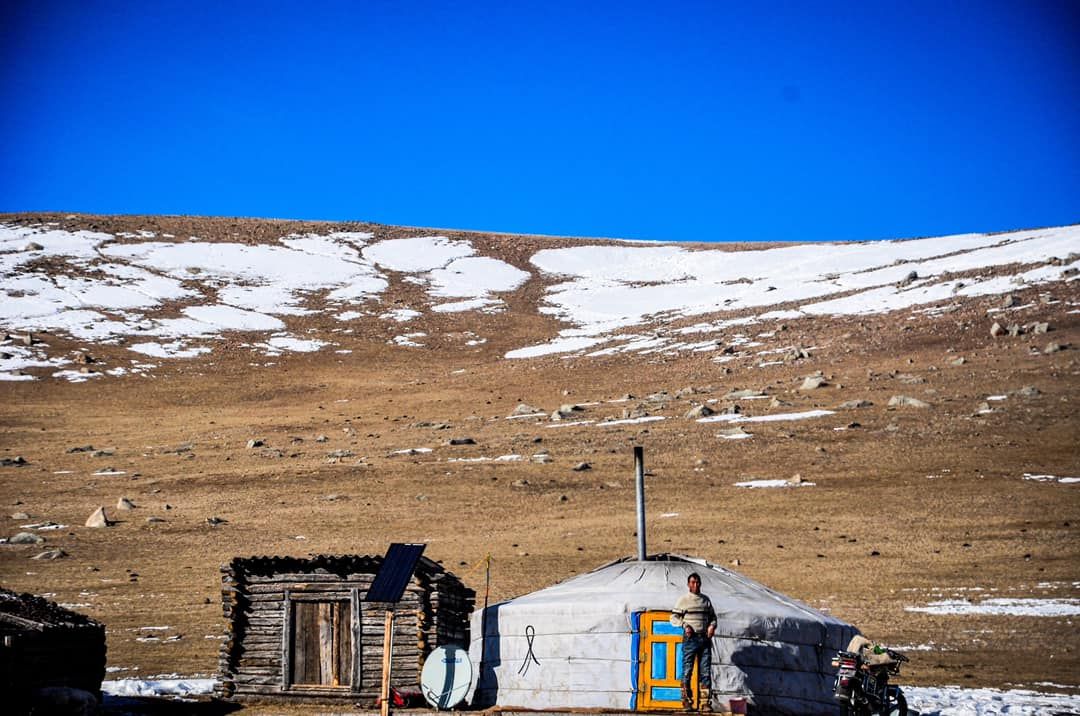
We had been driving for eight hours through the emptiness of the steppe – no roads, no buildings, no people in sight. Then suddenly we came across a man living in a yurt in the middle of nowhere, with only a small solar panel, a satellite dish, and his dog. The vast Mongolian steppe stretched endlessly around him. Absolute silence and solitude – until we arrived.
That was his world.
I remember thinking at that moment: that is the richest man in the world.
Not in terms of material wealth, but in his connection to the land, his self-sufficiency, and the quiet contentment of his life. Simplicity comes with challenges, but thriving does not come from abundance.
Are we thriving because of what we have, or because of how we live?
Perhaps we don’t need as much as we think to live well after all.
Mongolia also reinforced how deeply interconnected humanity and the environment truly are. Nomadic life is inherently regenerative. People take what they need, leave the land to recover, and move in rhythm with natural cycles. It stands in stark contrast to the extractive systems we often depend on today.
As we grapple with climate challenges, there is much we can learn from communities that have practised regeneration for centuries.
I have always hoped to return to Mongolia someday.
Perhaps this year.
Pictured above: the man, his yurt, and his world.