The world of higher education operates on a very linear rhythm.
Weeks numbered. Assessment tasks pre-defined on specific dates. Graded against rubrics. A very linear rhythm that assumes learning progresses neatly within a 12-week timeframe.
Anyone who teaches design knows – it really doesn’t work that way.
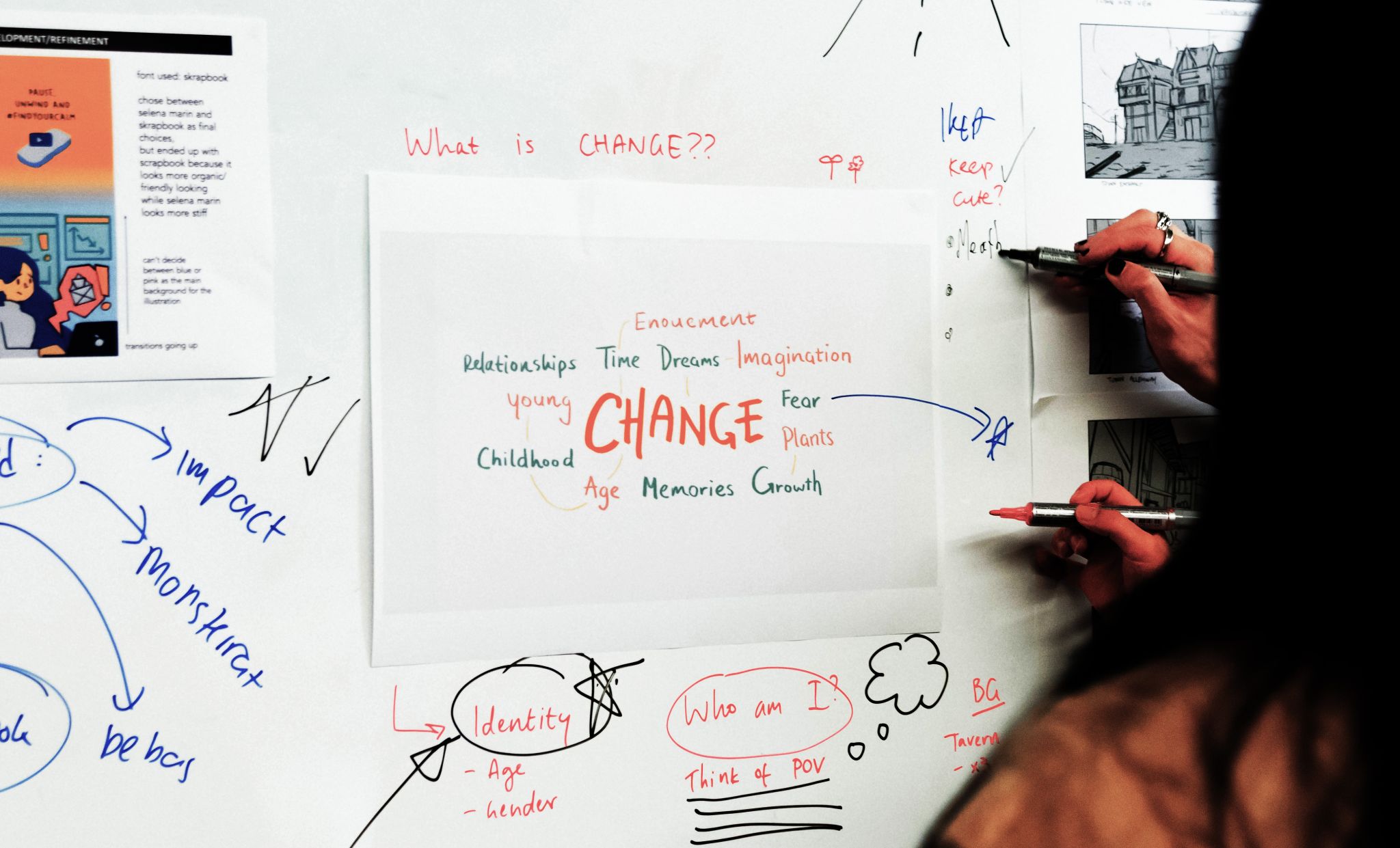
Design learning is messy. It iterates. It fails. It stalls. Then it accelerates. Ideas don’t arrive right on schedule when assignments are due. They emerge through failed experiments, unexpected critiques, moments of clarity. Oftentimes, the most powerful learning occurs after the deadline.
The challenge is how do we embrace the non-linear nature of design learning within a rigid system that demands metrics, precision and certainty. Students need structure, but they equally need ambiguity. A space to experiment and fail (safely). Our pedagogy must make space for that process.
I hear a lot of talk in curriculum spaces. Educational theories get name-dropped like credentials – constructivism, experiential learning, discovery learning – as if invoking the right one establishes legitimacy. Theories absolutely have their place, but are often retrofitted to pedagogical decisions already made. Deployed as a shield, not a lens.
Curriculum is tested in practice. It needs to hold up under the weight of actual lived experience inside and outside of the classroom. To give students space to seek meaning, struggle productively, come back with solutions – not on cue, but in their own time. All through embracing ambiguity, until the fog clears and the solution to the design problem is emergent.
I’ve been spending many hours on Curriculum Architecture the past week, thinking critically about how we structure and deliver Digital Design education across our three sizeable programs (Animation, Games and Digital Media). It is strategic, systems-level thinking. It deeply matters – the decisions we make here will shape the trajectory of thousands of students for years to come. It is the infrastructure of learning. The design of design learning.
I’ve been casting a UX design lens across this work. Treating curriculum as the interface, learners as personas, course structures as user flows, learning journey as user journeys. Where do students get stuck (friction points)? Are we designing for robust, meaningful development – or are we defaulting to logistical constraints + convenience?
The future of Digital Design won’t be built by tweaking what already exists, or defaulting into what’s easier just because circumstances are challenging – or worse, settling into a lack of imagination (my biggest fear). It requires re-imagining systems from the ground up. Being ambitious. Asking difficult questions. Making brave decisions.
We have to design for emergence. For ambiguity. For the kinds of futures that haven’t yet arrived.