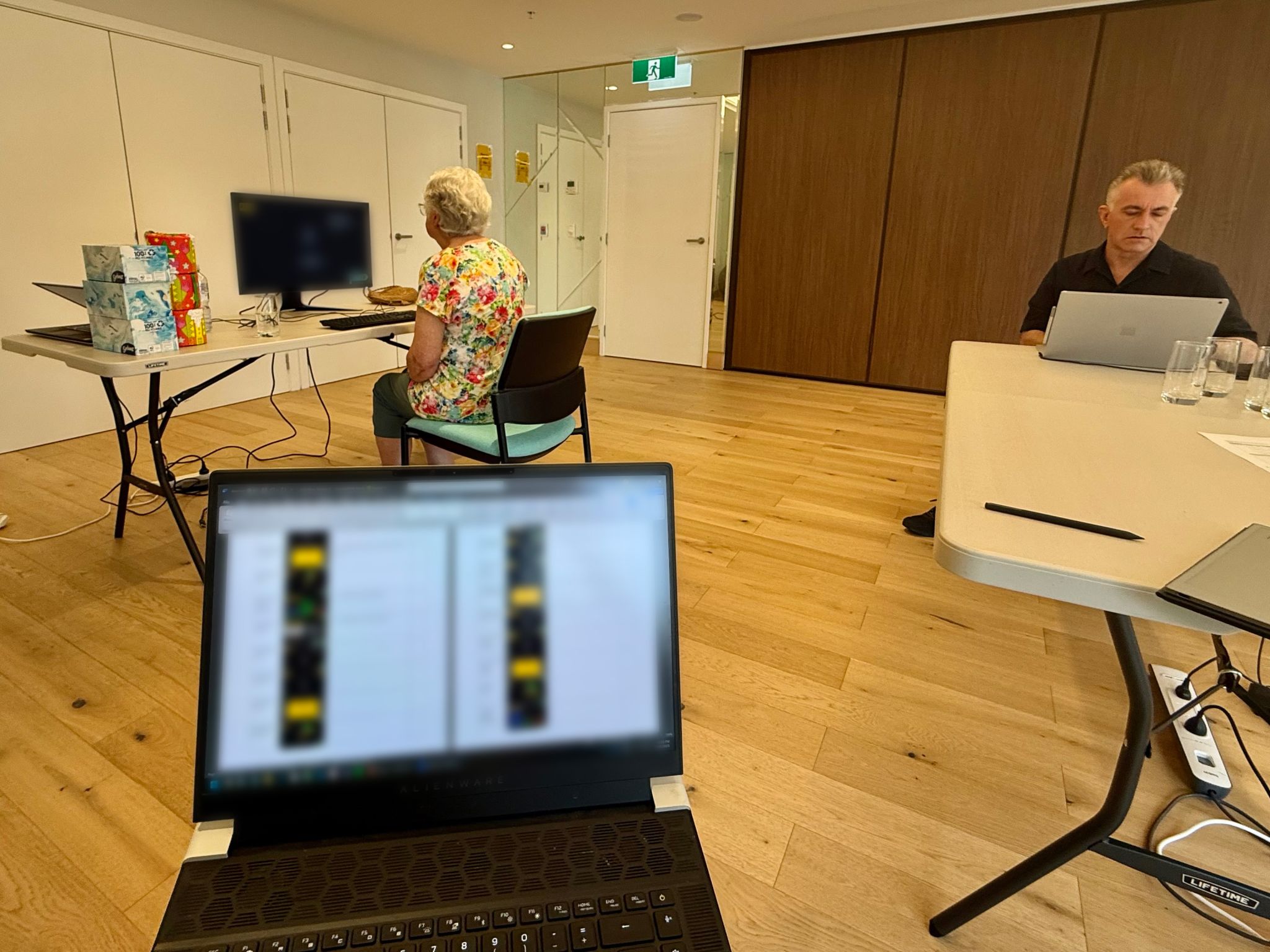
Spent half a day yesterday at a retirement village conducting usability testing with Associate Professor Jonathan Duckworth and our collaborators at Australian Catholic University (ACU). My research often takes me to interesting places – quite in awe of the amenities at this retirement village (I hadn’t been to one before).
Our project, the Road to Safer Walking, funded by the Australian Automobile Association (AAA), aims to develop a 3d online training platform to improve pedestrian safety for older adults.
It was a really interesting session – I hadn’t done usability testing for this age group before. Our participants were between 70-80+, which presented different user experience (UX) and interaction design challenges compared to the younger group (50–65) we tested a several months ago.
Observing their interactions and noting moments of friction (often ones we wouldn’t even consider or expect) – design assumptions most certainly don’t always cut across different age groups – inclusive and accessible design isn’t just a tick-box exercise, but rather a necessity.
Something as simple as the preferred angle of the monitor (influenced by bifocals), the precision of mouse tracking or how our text instructions are presented – these small nuances can mean the difference between a pleasant, enjoyable user experience – or a deeply frustrating one.
Always design with real users, not assumed personas.
As I sat watching, it also made me think about how our physical and cognitive ability decline over time. We don’t notice it when we’re younger, but watching these small struggles up close made me appreciate my own mobility and mental agility – things I take for granted. It’s quite humbling – a reminder that design isn’t just about function and aesthetics, but about ensuring dignity and ease of use for everyone.
We have another half-day of testing to go today, but this has been a refreshing shift from the usual busyness of the Associate Dean role at RMIT University School of Design. It’s been a particularly hectic week – full of meetings, decisions and all the constant juggling act that comes with academic leadership. I miss doing fieldwork like this – it’s a welcome reprieve to step away, even briefly, to immerse myself in hands-on research with amazing collaborators.
I love and thrive in this kind of work – I’m reminded once again why research like this matters.